Table of Contents
ToggleIntroduction
The term asbestlint is increasingly appearing in discussions related to older buildings, construction materials, and environmental safety. Although not a formal scientific term, it is commonly used to describe asbestos-related fibres, dust, or tape-like materials that were widely used in industrial and domestic settings in the past. Understanding asbestlint is important because it is closely linked to asbestos exposure, a well-known health hazard.
In older buildings across the UK and other parts of the world, materials containing asbestos were once considered highly valuable due to their strength, insulation properties, and resistance to heat. However, as research progressed, it became clear that disturbing these materials could release dangerous fibres into the air. These airborne particles are often referred to informally as asbestlint.
This article explores what asbestlint means, where it is found, its potential health risks, and how awareness and proper safety measures can reduce exposure.
What is Asbestlint?
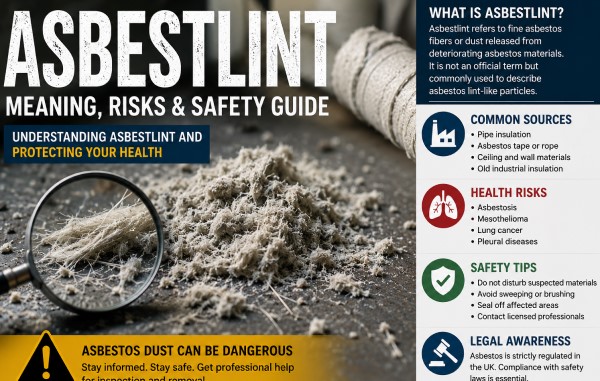
The word asbestlint is generally used to describe fine asbestos fibres, dust, or tape-like remnants of asbestos-based materials. It is not a technical classification but rather a descriptive term used in renovation, environmental safety, and informal discussions.
In simple terms, asbestlint refers to any loose or fibrous asbestos material that may become airborne when disturbed. This can include:
- Deteriorating asbestos insulation
- Worn-out asbestos tape or rope
- Dust created from damaged asbestos sheets
- Residue from old industrial materials
Origins of the Term
The word appears to be derived from combining “asbestos” and “lint”, suggesting fine, fluffy particles or fibres. This helps explain its usage when referring to microscopic asbestos fragments that resemble lint-like dust.
Although not officially recognised in scientific literature, the term has become common in online discussions and renovation contexts.
Composition and Connection to Asbestos
To understand asbestlint properly, it is essential to understand asbestos itself.
Asbestos is a group of naturally occurring minerals composed of thin, fibrous crystals. These fibres are strong, heat-resistant, and do not burn easily, which is why they were widely used in construction materials throughout the 20th century.
Asbestos Fibres Explained
Asbestos fibres are microscopic and cannot be seen with the naked eye. When materials containing asbestos are damaged or disturbed, they release these fibres into the air. When these fibres accumulate in dust form, they may be referred to as asbestlint.
There are several types of asbestos, including:
- Chrysotile (white asbestos)
- Amosite (brown asbestos)
- Crocidolite (blue asbestos)
Each type carries health risks when inhaled, regardless of variation.
Historical Uses of Asbestlint-Related Materials
Materials associated with asbestlint were widely used before asbestos regulations were introduced. These materials were valued for durability and fire resistance.
Common Historical Applications
In the past, asbestos-containing materials were used in:
- Pipe insulation in homes and factories
- Boiler and furnace lagging
- Ceiling and roofing sheets
- Cement boards and tiles
- Heat-resistant tapes and seals
Asbestos tape and cloth were especially common in industrial environments. Over time, these materials degrade, releasing fine fibres that contribute to what is often referred to as asbestlint.
Health Risks Associated with Asbestlint
The most serious concern regarding asbestlint is its impact on human health. When inhaled, asbestos fibres can become lodged in the lungs and remain there permanently.
Respiratory Diseases Linked to Exposure
Exposure to asbestos fibres, including those referred to as asbestlint, can lead to several severe health conditions:
- Asbestosis – a chronic lung disease causing scarring of lung tissue
- Mesothelioma – a rare and aggressive cancer affecting the lining of the lungs or abdomen
- Lung cancer – increased risk, especially among smokers exposed to asbestos
- Pleural thickening – inflammation and thickening of the lung lining
How Exposure Occurs
Exposure typically happens when asbestos-containing materials are disturbed. Common situations include:
- Renovation or demolition of old buildings
- Drilling or cutting asbestos insulation
- Natural deterioration of materials over time
- Improper handling of asbestos waste
Even short-term exposure can be dangerous if fibre concentration is high.
Identifying Asbestlint in Buildings
Recognising asbestlint is not straightforward because asbestos fibres are invisible to the naked eye. However, certain signs may indicate potential asbestos presence:
Warning Signs in Older Properties
- Insulation materials installed before the 1990s
- Old pipe lagging or wrapping materials
- Crumbling ceiling or wall boards
- Deteriorating industrial insulation
- Dust accumulation in areas with old construction materials
It is important to note that visual inspection alone cannot confirm asbestos. Professional testing is always required.
Safety Measures and Handling Precautions
Because asbestlint is associated with hazardous asbestos fibres, it should always be treated with extreme caution.
Essential Safety Guidelines
- Avoid disturbing suspected asbestos materials
- Do not sweep, vacuum, or brush areas that may contain asbestos dust
- Seal off affected areas if damage is noticed
- Keep people away from suspected contaminated zones
- Contact licensed asbestos professionals for inspection
Professional Management
Only trained and licensed asbestos removal specialists are permitted to handle and remove asbestos materials safely. They use protective equipment, controlled environments, and specialised disposal methods to prevent fibre release.
Attempting to remove asbestos without proper training can significantly increase health risks.
Asbestlint and UK Regulations
In the United Kingdom, asbestos is strictly regulated due to its hazardous nature. The use of most asbestos types has been banned, but many older buildings still contain it.
Key Legal Framework
- The Control of Asbestos Regulations
- Health and Safety at Work legislation
- Duty to manage asbestos in non-domestic premises
Building owners and employers are legally required to identify and manage asbestos risks within their properties. Failure to do so can result in serious legal consequences.
Prevention and Long-Term Awareness
Preventing exposure to asbestlint is largely about awareness and proper management of older materials.
Best Practices for Safety
- Conduct asbestos surveys before renovation work
- Maintain records of building materials in older properties
- Train workers in asbestos awareness
- Regularly inspect buildings for signs of material degradation
- Use licensed contractors for any suspected asbestos work
Public awareness remains one of the most important tools in preventing exposure-related diseases.
Conclusion
The term asbestlint refers to fine asbestos fibres or dust that may originate from deteriorating asbestos-containing materials. While the term itself is informal, the risks associated with it are very real and scientifically well documented.
Asbestos exposure remains a significant health concern, particularly in older buildings where materials may still be present. Understanding what asbestlint is, how it forms, and how it should be managed is essential for ensuring safety in homes, workplaces, and industrial environments.
With proper awareness, regulation, and professional handling, the risks associated with asbestos can be significantly reduced. However, caution must always be the priority, as even small exposures can have long-term consequences.