Table of Contents
ToggleIntroduction to Spaietacle
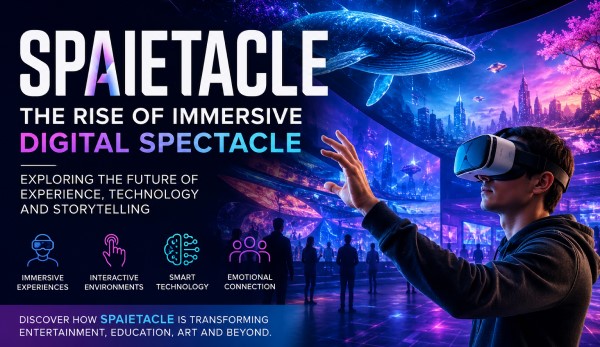
The term Spaietacle is an emerging concept in the world of digital creativity, immersive media, and experiential design. While not yet formally defined in traditional dictionaries, it is increasingly used to describe a fusion of space and spectacle—a powerful combination where environments are transformed into interactive, sensory-rich experiences.
In simple terms, Spaietacle represents the evolution of storytelling and engagement, where audiences are no longer passive viewers but active participants inside dynamic, immersive environments. It blends technology, creativity, psychology, and design into one unified experience.
As digital innovation continues to expand, Spaietacle is becoming a keyword associated with the future of entertainment, education, branding, and virtual interaction.
The Meaning and Concept of Spaietacle
What Does Spaietacle Represent?
Spaietacle can be understood as a modern experiential framework where physical or digital spaces are designed to deliver a visually striking and emotionally engaging experience. Unlike traditional media such as films or static displays, Spaietacle environments are interactive and often personalised.
It may include:
- Virtual reality environments
- Augmented reality installations
- Immersive art exhibitions
- Interactive digital storytelling spaces
- Large-scale projection experiences
At its core, Spaietacle is about transforming ordinary environments into extraordinary experiences that blend reality with imagination.
Origins of the Term
Although the term is relatively new and not formally standardised, it appears to be a blend of two ideas:
- Space – referring to physical or digital environments
- Spectacle – referring to visually striking or emotionally engaging displays
Together, they form a concept that highlights experience-driven design in the digital age.
The Core Principles Behind Spaietacle
Immersion
Immersion is the foundation of any Spaietacle experience. It ensures that users feel fully present within the environment. This is often achieved through:
- 360-degree visuals
- Surround sound design
- Interactive elements
- Real-time responsiveness
The goal is to make the user forget they are observing and instead feel like they are inside the experience.
Interactivity
Unlike traditional media, Spaietacle requires participation. Users are not passive viewers; they influence the environment through their actions, movement, or choices.
For example:
- A museum exhibit that changes visuals based on visitor movement
- A virtual world that responds to voice commands
- A digital installation that evolves with audience input
Emotional Engagement
Spaietacle experiences are designed to evoke strong emotional responses. Whether it is awe, curiosity, excitement, or reflection, emotional connection is key to making the experience memorable.
Technological Integration
Modern Spaietacle experiences often rely on advanced technologies such as:
- Virtual Reality (VR)
- Augmented Reality (AR)
- Artificial Intelligence (AI)
- Motion tracking systems
- Holographic projection
These tools help create seamless, realistic, and responsive environments.
Applications of Spaietacle in the Modern World
Entertainment and Media
One of the most significant uses of Spaietacle is in the entertainment industry. Concerts, films, and theatre productions are increasingly using immersive technology to enhance audience engagement.
Examples include:
- Interactive live performances
- Virtual concerts
- 3D cinematic environments
These experiences allow audiences to feel part of the performance rather than just observers.
Education and Learning
Spaietacle is also transforming education. Instead of traditional classroom learning, students can experience subjects in immersive ways.
For example:
- Exploring ancient civilisations through VR environments
- Simulated science experiments in virtual labs
- Interactive historical recreations
This approach improves understanding and retention by making learning experiential.
Marketing and Branding
Businesses are using Spaietacle to create memorable brand experiences. Instead of standard advertisements, companies now design interactive campaigns that engage customers emotionally.
This might include:
- Immersive pop-up installations
- AR product demonstrations
- Digital storytelling campaigns
Such experiences help brands stand out in competitive markets.
Art and Culture
Artists and designers are embracing Spaietacle to push creative boundaries. Digital art exhibitions now use light, sound, and interaction to create fully immersive environments.
Visitors become part of the artwork itself, making each experience unique and personal.
The Psychological Impact of Spaietacle
Sensory Overload and Engagement
Spaietacle environments stimulate multiple senses simultaneously. This can create a powerful psychological effect known as sensory immersion, where the brain fully engages with the experience.
Memory Retention
People are more likely to remember experiences that involve active participation. Spaietacle takes advantage of this by creating memorable interactions rather than passive viewing.
Emotional Connection
By combining visuals, sound, and interaction, Spaietacle experiences often create strong emotional impressions. This is what makes them effective in storytelling and branding.
The Role of Technology in Spaietacle Evolution
Artificial Intelligence
AI helps personalise experiences in real time. For example, an immersive environment might adapt its visuals or storyline based on user behaviour.
Virtual and Augmented Reality
VR and AR are central to Spaietacle development. They allow users to enter entirely new worlds or overlay digital content onto the physical environment.
Projection Mapping
Large-scale projection systems can transform buildings, stages, or entire spaces into dynamic visual canvases.
Sensor Technology
Motion sensors, eye tracking, and gesture recognition allow environments to respond naturally to human presence.
Challenges Facing Spaietacle Development
High Production Costs
Creating immersive environments requires advanced equipment and skilled professionals, making it expensive.
Accessibility
Not everyone has access to VR devices or high-end technology, limiting widespread adoption.
Technical Complexity
Developing responsive and stable immersive systems requires complex programming and design integration.
User Overstimulation
Excessive sensory input can sometimes overwhelm users, reducing comfort and engagement.
The Future of Spaietacle
The future of Spaietacle is closely tied to technological advancement. As digital tools become more accessible, immersive experiences will likely become part of everyday life.
We can expect:
- Fully interactive smart cities
- Immersive virtual workplaces
- AI-driven personalised entertainment
- Real-time global digital events
In the coming years, Spaietacle may evolve from a niche concept into a mainstream experience format across industries.
Conclusion
Spaietacle represents a new frontier in how humans interact with digital and physical environments. It combines creativity, technology, and emotional storytelling to create deeply engaging experiences.
From education to entertainment, and from marketing to art, Spaietacle is reshaping how content is designed and consumed. While still evolving, its potential is vast, and it is likely to play a major role in the future of immersive digital culture.
As the boundaries between reality and virtual experience continue to blur, Spaietacle stands as a symbol of the next generation of human engagement with technology.